A messy home feels more manageable when you treat the weekend as a reset, not a promise to organize every possession perfectly. The most effective plan is to restore basic function first, reduce visible clutter second, clean high-use areas third, and leave detailed organizing for only the spaces that matter most.
TL;DR: Start with trash, dishes, laundry, and clear walking paths. Work room by room in short timed passes, use temporary sorting bins to avoid getting stuck on decisions, clean only after surfaces are accessible, and finish by assigning a simple home to the items that repeatedly create clutter.
What to Gather Before You Start
Gather trash bags, recycling bags or boxes, a laundry basket, a donation box, microfiber cloths, an all-purpose cleaner that is suitable for your surfaces, a vacuum or broom, a mop if needed, and several open bins or baskets for temporary sorting. Painter's tape and a marker are useful for labeling categories such as "belongs elsewhere," "donate," and "decide later."
If your reset uncovers a room that is difficult to arrange rather than simply cluttered, save the layout problem for a focused follow-up. Our guide to designing around an awkward room shape explains how to work with traffic paths, furniture scale, and irregular corners without turning a cleaning weekend into a full redesign.
Set a Realistic Definition of "Reset"
The goal is not to make every drawer photogenic. A useful reset leaves the home easier to walk through, easier to clean, easier to use, and easier to maintain on Monday morning. Decide what "functional" means for your household before you begin.
For most homes, that means clear floors and stairs, usable kitchen counters, a controlled sink, a sanitary bathroom, contained laundry, and commonly used items returned to predictable places.
This distinction matters because detailed sorting consumes decision energy. If you stop to examine every cable, paper, toy, or keepsake, a two-day project can stall in the first room. Give uncertain items a temporary holding place and schedule a later review.
Saturday Morning: Remove What Is Obviously Out of Place
Begin with a fast whole-home pass before deep cleaning any room. Carry a trash bag and recycling container. Remove obvious trash, expired packaging, empty bottles, junk mail you do not need, and broken disposable items. Do not open cupboards or storage boxes yet.
Next, collect dishes from every room and move them to the kitchen. Start a dishwasher cycle or wash a first batch by hand. Collect dirty laundry and begin the first load. Put clean but unfolded laundry into one designated basket so it stops spreading across chairs and beds.
Now clear primary walking routes. Shoes, bags, cords, toys, and stacks on stairs or hallways should be relocated immediately. This is also a safety check. Heavy or tall storage furniture should not become a convenient place to stack unstable loads, especially in homes with children. The U.S. Consumer Product Safety Commission's Anchor It guidance recommends securing TVs and top-heavy furniture to reduce tip-over hazards.
Saturday Afternoon: Reset the Highest-Impact Rooms
Once the whole home has had a first pass, focus on the rooms that influence daily routines most: usually the kitchen, main bathroom, entry, and living area.
Kitchen
Clear one counter completely so you have a working surface. Return food to cabinets or the refrigerator, group appliances by how often they are used, and remove unrelated items from the room. If your kitchen is a rental and lacks built-in storage, do not let the reset turn into a permanent-installation project. The ideas in making a rental kitchen more functional focus on reversible ways to improve storage and workflow.
Clean surfaces only after clutter is removed. The CDC's household cleaning guidance distinguishes routine cleaning from sanitizing and disinfecting. For most everyday situations, regular cleaning with soap or an appropriate household cleaner is sufficient; disinfecting is generally more relevant when someone is sick or a higher-risk situation applies. Always follow product labels and never mix cleaning chemicals.
Bathroom
Remove empty containers and products that do not belong in the room. Put daily-use items together, contain backups separately, and clear the floor. Clean the sink, toilet, tub or shower, mirror, and high-touch areas with products appropriate for those surfaces. Replace towels and empty the trash.
Entry and Living Area
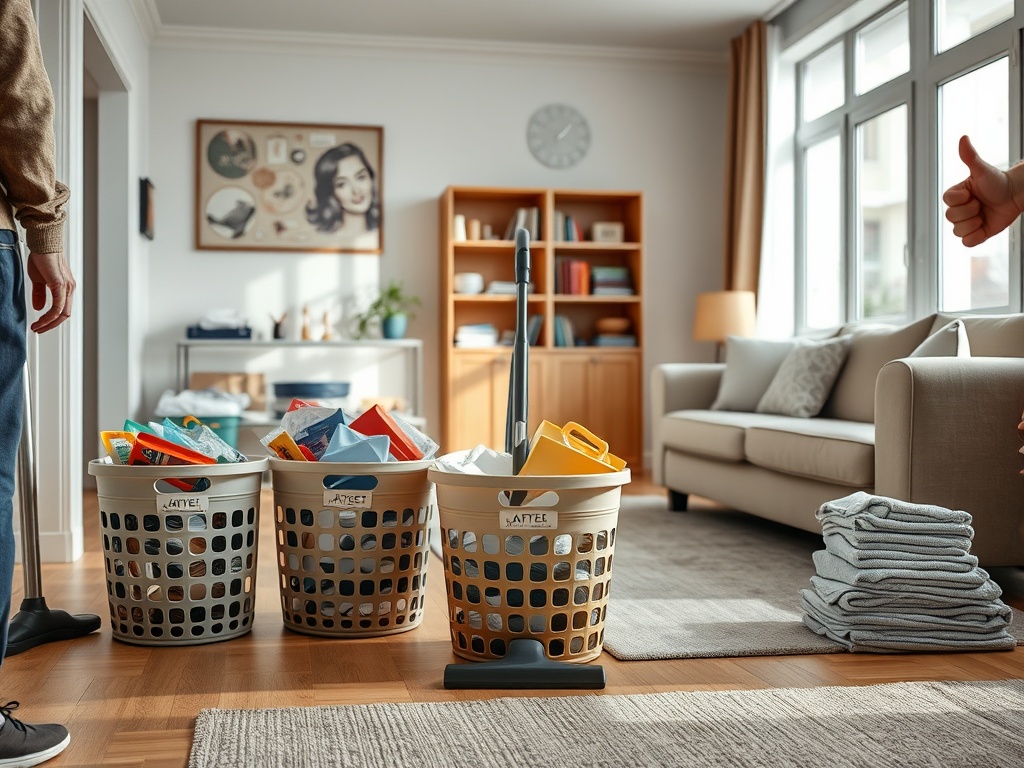
Create a landing zone for shoes, keys, mail, and bags. In the living room, restore seating first. Move items that belong elsewhere into a transfer basket instead of walking them to other rooms one at a time. At the end of the session, carry the basket through the house and redistribute its contents in one loop.
Use a Three-Pass Method for Bedrooms and Secondary Spaces
Bedrooms, offices, playrooms, and spare rooms often contain more personal decisions. Use three passes rather than trying to finish everything at once.
Pass 1: remove. Collect trash, dishes, laundry, and items that clearly belong elsewhere.
Pass 2: restore function. Make the bed, clear enough floor to move safely, uncover the desk or dresser surface you actually use, and group similar items together.
Pass 3: organize only the pressure points. Tackle the nightstand that overflows, the chair that collects clothing, the desk pile that blocks work, or the closet shelf that causes items to fall. Ignore low-impact areas until the basics are stable.
If one of those pressure points is a cramped laundry area, redesigning a laundry closet for more capacity is a better next project than buying random baskets during the reset.
Sunday Morning: Clean in the Right Order
Cleaning goes faster when it follows decluttering. Work from higher surfaces to lower ones so dust and crumbs that fall can be captured later. A practical order is dusting and wiping, then vacuuming or sweeping, then mopping where the flooring permits it.
Do not use one cleaner indiscriminately on every surface. Natural stone, sealed wood, painted finishes, screens, and some metals may need different products or methods. Follow manufacturer guidance when available. Ventilate the space as directed on product labels, wear recommended protective equipment, and keep chemicals away from children and pets.
Sunday Afternoon: Give Repeating Clutter a Simple Home
The last stage is not about perfect storage. It is about eliminating obvious friction. Look for objects you moved more than once during the weekend. Those items often reveal where a storage system is missing or inconvenient.
Troubleshooting When the Reset Starts to Stall
If you run out of time, stop organizing and return to function: clear paths, dishes, laundry, food safety, bathroom sanitation, and needed surfaces.
If you are stuck on sentimental or expensive items, place them in a dated "decide later" box. The box is a pause, not permanent storage. Set a reminder to review it when you are not tired from cleaning.
If clutter rebounds within days, the problem may be capacity or placement rather than motivation. Watch where items naturally land. Moving storage closer to the point of use is often more sustainable than repeatedly carrying objects to an inconvenient location.
Keep the Monday-Morning Win
A successful weekend reset should reduce the amount of effort needed to keep the home usable. For the next week, choose a short evening closeout: return dishes, contain laundry, clear the main counter, and put stray items into their homes or a transfer basket. That small routine is more valuable than trying to repeat a marathon clean.
Pick one remaining pressure point and improve it next weekend rather than reopening the whole house. A reset works best as a foundation for smaller, calmer maintenance decisions.
Home cleaning and organization information is provided for general educational purposes. Follow product labels and manufacturer instructions, and consult an appropriate professional when a task involves electrical, structural, hazardous-material, pest-control, or other specialized risks.[/