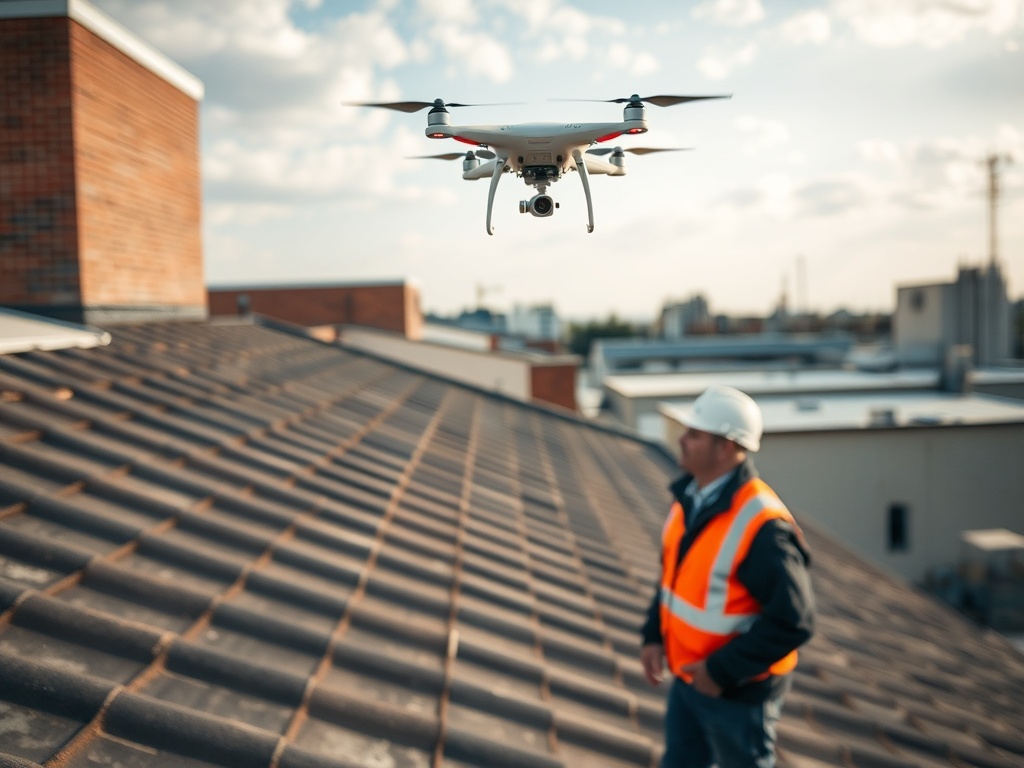
Drone tools support roof inspections and construction progress tracking by capturing aerial images, video, and measurement data without putting inspectors on every roof surface. They are useful when paired with qualified review, safe flight practices, and clear documentation standards.
TL;DR: Key takeaways for drone roof inspections construction.
- Commercial drone work in the United States is generally governed by FAA Part 107 requirements.
- Drones can improve visibility for steep roofs, large sites, difficult access areas, and progress records.
- They do not replace professional inspection judgment, hands-on testing, or code-required verification where those are needed.
What drones add to inspection work
Roof inspection often involves access risk, weather exposure, steep slopes, fragile materials, and large areas that are difficult to view from the ground. A drone can capture high-resolution images and video from multiple angles, helping inspectors document conditions before deciding where closer review is needed.
For construction progress, drones provide repeatable visual records of installed work, staging, site logistics, roof areas, facade conditions, drainage paths, and access constraints. Those records can support meetings, owner updates, and dispute avoidance when used carefully.
The FAA’s Part 107 rules cover many commercial small unmanned aircraft operations in the United States, so contractors should treat drone work as regulated aviation activity, not just photography. The FAA Part 107 small UAS regulations should be checked when planning commercial drone operations in the United States.
Roof inspection uses that fit the tool
Drones are helpful for initial visual screening, storm documentation, roof area mapping, hard-to-access slopes, gutter and flashing review, solar or mechanical equipment overview, and progress comparison over time. Thermal or specialized sensors may add information when used by trained professionals under suitable conditions.
The tool has limits. It may not confirm moisture below a membrane, fastener pullout, hidden structural damage, or material performance without additional testing. Aerial images should be interpreted by someone who understands roofing systems, drainage, penetrations, safety, and manufacturer requirements.
When pricing or scoping repairs, connect the drone record to clear cost language. The discussion about markup and margin is relevant because image documentation can support scope clarity, but it does not automatically settle pricing. This is where markup versus margin in construction helps keep estimate language clear.
| Review point | What to check | Why it matters |
|---|---|---|
| Scope clarity | Confirm assumptions, exclusions, owner decisions, and field constraints. | Prevents vague expectations from becoming changes or rework. |
| Schedule exposure | Identify approvals, procurement, access, inspections, and dependencies. | Keeps hidden waiting time visible before crews are affected. |
| Documentation | Tie decisions to drawings, logs, photos, contracts, or approved reports. | Creates a record that can be used by owners, contractors, and maintenance teams. |
Progress tracking without creating noise
A drone flight plan should define what will be captured, how often, from what viewpoints, and how files will be named and stored. Random footage may look impressive but be hard to use. Repeatable capture points make progress easier to compare.
Teams should decide who reviews the footage, who receives it, what privacy rules apply, and how observations become action items. Progress images should be tied to the schedule, submittals, safety observations, or payment review where appropriate. These records can also strengthen safety observations and leading indicators when observations need visual context.
For owners, drone records can make meetings more concrete. Instead of debating whether work advanced, the team can compare images against the look-ahead plan.

Safety, privacy, and permissions
Commercial flights may require a certificated remote pilot, airspace checks, visual line of sight, operating limits, and waivers for certain conditions. Local rules, site policies, owner permissions, and privacy expectations may also apply.
No photo is worth unsafe flight. Avoid flying over people without proper compliance, near cranes without coordination, in poor weather, or where the pilot cannot maintain control and visibility.
Drone use can also support safety leading indicators by documenting access issues, housekeeping, roof edge exposure, and site congestion from safe viewpoints.
Buying or hiring decision framework
Decide whether the need is occasional documentation, recurring progress tracking, roof inspection support, mapping, thermal imaging, or marketing. Then choose between hiring a qualified provider and building an internal program. Internal programs need training, insurance review, maintenance, file management, and flight procedures. Property teams comparing inspection needs with code-use decisions may also find occupancy classifications for property owners helpful.
Ask providers for licensing, insurance, sample deliverables, data handling practices, safety procedures, and limitations. The right deliverable may be a simple image set, annotated report, orthomosaic, video, or comparison package.
Educational disclaimer: this article is for general education only. It is not aviation, legal, roofing, engineering, insurance, compliance, or project management advice. Follow applicable rules and qualified professional guidance.
Drone program notes for inspection teams
A practical way to use this guidance is to turn the article topic into a short review conversation before the work moves forward. For drone roof inspections construction, the discussion should include who owns the decision, what information is reliable, what is still assumed, and what action would change if new information appears. That keeps the topic from becoming a general idea that everyone supports but nobody manages.
Documentation should be simple enough for field and office teams to maintain. Meeting notes, photos, marked drawings, schedules, inspection records, and approval logs are useful only when they are organized and easy to retrieve. The goal is not to create a paperwork burden. The goal is to create a reliable memory for decisions that may matter during pricing, sequencing, quality review, maintenance, or dispute prevention.
Owners and contractors should also separate preference from requirement. A preferred method may be efficient or familiar, but a requirement comes from the contract, code, manufacturer instructions, engineered design, safety regulation, or authority having jurisdiction. When those categories are mixed together, teams may overstate certainty or miss a mandatory step.
The strongest teams revisit assumptions at each milestone. Early planning may rely on broad allowances and conceptual details. Design development should replace assumptions with specifications, quantities, and coordinated drawings. Construction should replace planned conditions with verified field information. Closeout should preserve what was installed, changed, tested, or accepted for future maintenance.
A final review should ask three plain questions: what could go wrong, how would we know early, and who has authority to respond? Those questions keep the article useful beyond reading. They turn the concept into a management habit that supports safer work, clearer budgets, cleaner contracts, and better long-term building performance.
Contractors should also decide how long flight records will be retained and who may access them. Roof images can reveal property conditions, neighboring areas, equipment layouts, or occupants, so file control is part of responsible practice.
For roof work, the drone deliverable should be matched to the decision. A claim file, maintenance record, construction progress update, and repair estimate may each need different images, angles, notes, and storage practices.
Flight planning before the next inspection
Use this article as an educational starting point, then confirm project-specific requirements with qualified professionals, current documents, and the authority responsible for the work. The best next step is to turn the key questions above into a short review checklist before money, schedule, or materials are committed.