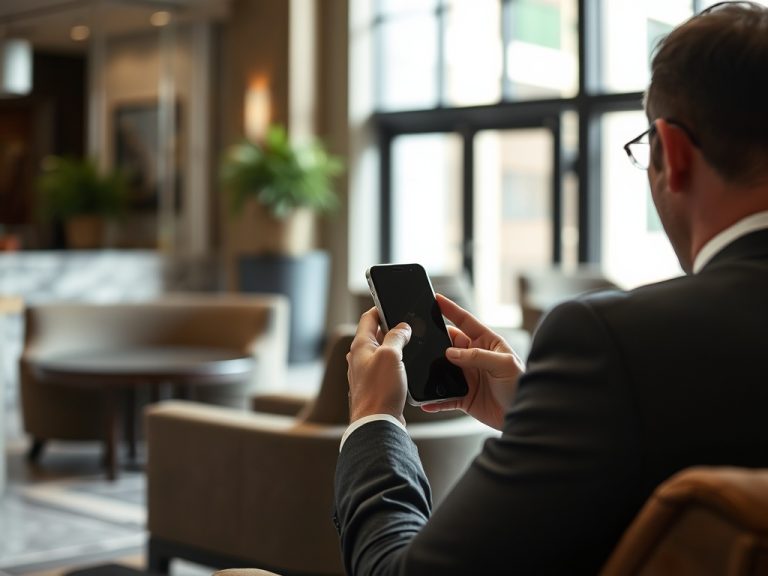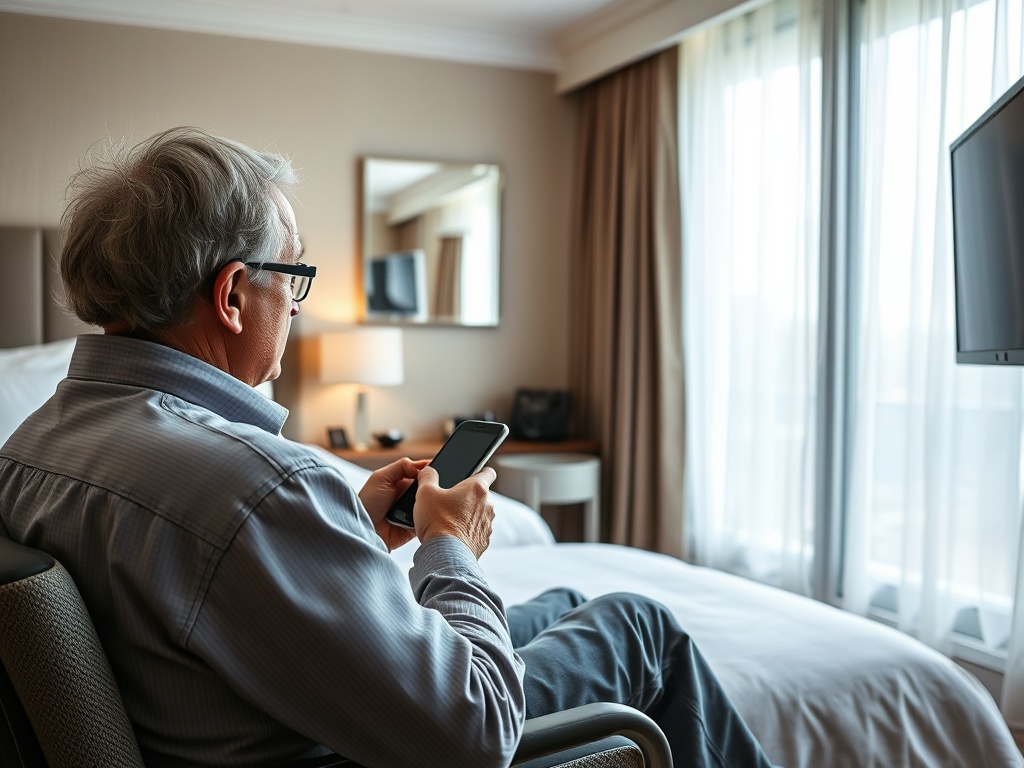
Technology can make hotels more accessible when it helps travelers find accurate accessibility information, complete reservations independently, communicate preferences, control room features, and use digital services with assistive technology. Accessibility gains are strongest when digital tools reinforce accessible physical design and trained service, not when an app is treated as a substitute for either one.
TL;DR
- Accessible hotel technology begins before arrival with accurate descriptions of accessible rooms and features.
- Digital check-in, mobile keys, kiosks, and in-room controls should have accessible alternatives and should not create a new barrier when a device cannot be used.
- Hotels need to test with real assistive technologies and real users because automated checks do not capture every accessibility problem.
Accessibility Starts in Search and Reservation
A traveler who needs an accessible room may need specific information about entrances, bathroom configuration, bed access, visual or audible alerts, parking, routes to amenities, or communication options. Vague statements such as 'accessible room available' do not answer those questions. Reservation technology is valuable when it presents enough structured detail for a traveler to make an informed choice.
U.S. ADA Title III regulations state that places of lodging must allow individuals with disabilities to make reservations for accessible rooms during the same hours and in the same manner as others, and must identify and describe accessible features in enough detail to permit independent assessment. The ADA lodging reservation requirements make accurate digital information part of access, not just a marketing enhancement.
Accessible Websites and Booking Engines Are Core Infrastructure
A hotel website may be visually polished yet difficult to use with a keyboard, screen reader, magnification, voice control, or other assistive technology. Common barriers include unlabeled controls, poor focus order, low contrast, inaccessible date pickers, images without meaningful alternatives, and forms that do not explain errors clearly.
The World Wide Web Consortium's WCAG 2.2 standard organizes web accessibility around perceivable, operable, understandable, and robust content. WCAG is a technical standard, not a complete description of every legal obligation or user need, but it provides a strong framework for testing hotel websites, booking flows, digital concierge tools, and other web interfaces.
Mobile Check-In and Digital Keys Need Equivalent Paths
Contactless check-in and mobile keys can be convenient for many travelers. They can also create barriers if authentication depends on a gesture a user cannot perform, if instructions are only visual, if the app does not work with assistive technology, or if the property has no simple staffed alternative. Accessibility requires more than making the feature technically available.
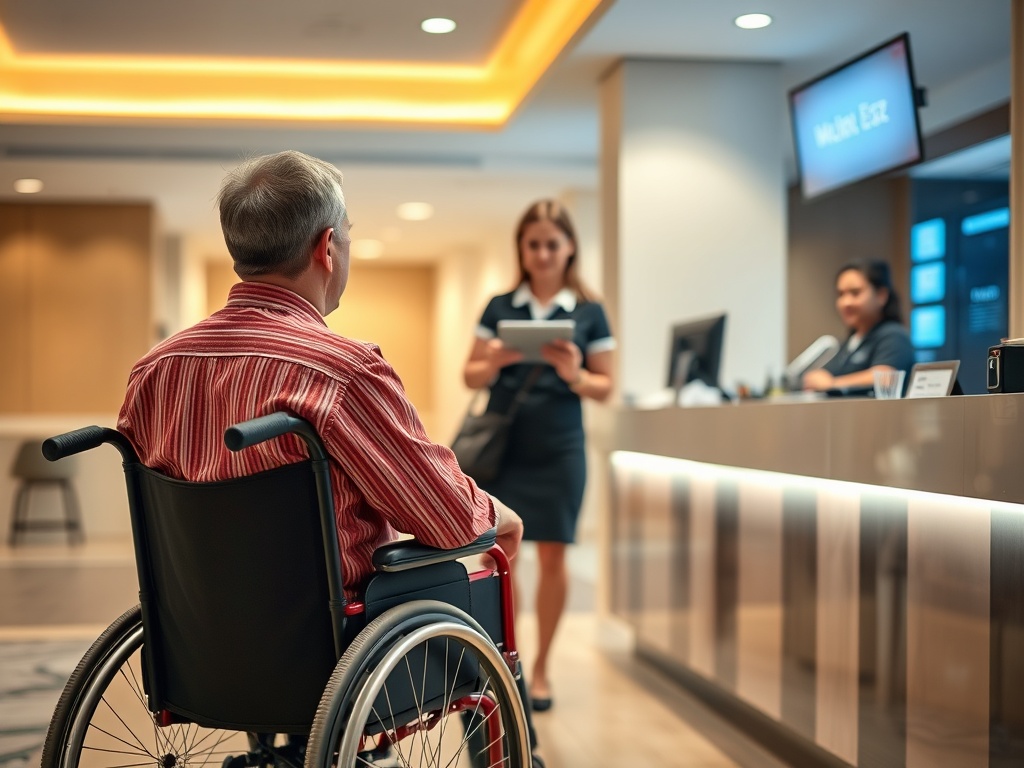
A resilient process gives guests choices. A traveler can use the app, a kiosk, the front desk, or another appropriate channel without losing a room, benefit, or place in the queue. This principle connects to hotel workflow technology, because staff need clear procedures for handling accessibility-related exceptions rather than improvising when the digital path fails.
In-Room Controls Can Improve Independence When They Stay Understandable
Smart-room systems can support lighting, temperature, curtains, television, service requests, and communication from a centralized control. For some guests, a well-designed interface can reduce the need to reach multiple switches or call the front desk. Voice control may also help in certain contexts.
The system should not make essential functions dependent on speech, perfect vision, a personal phone, or a complex touchscreen. Physical controls, tactile cues, clear contrast, predictable placement, and straightforward instructions remain important. Technology should increase the number of usable ways to control the room, not collapse them into one fashionable interface.
AI Can Support Communication, With Careful Limits
AI-powered chat and translation can help guests ask questions in different languages or communication styles, and it can help staff retrieve accessibility information faster. The risk is that a generated answer may overstate what a room or property can provide. Accessibility details often need precision, and an incorrect answer can have a serious effect on a traveler's stay.
This is where AI-assisted travel planning needs a verification layer. A system can help formulate questions and summarize official information, but a traveler with a critical requirement should be able to confirm the feature with the property or a reliable reservation source before arrival.
Accessibility Technology Should Be Tested as a Journey
Hotels often test individual components, but the guest experiences a sequence: research, reservation, confirmation, arrival, entry, room controls, amenities, service requests, checkout, and post-stay communication. A barrier in any one step can undermine an otherwise accessible property.
Testing should therefore include common assistive technologies, keyboard-only operation, zoom and reflow, captioning where relevant, contrast, error recovery, and real-world service scenarios. Automated scans can find certain code issues, but they cannot determine whether accessibility information is complete, whether a workflow is understandable, or whether staff know how to respond.
Procurement Questions That Put Accessibility Up Front
Accessibility should appear in technology procurement requirements before a hotel signs a contract. Vendors can be asked how their web or mobile product works with screen readers and keyboard-only operation, how they test color contrast and focus behavior, whether captions or text alternatives are supported, and how accessibility defects are reported and fixed. Hotels should also ask whether the vendor can provide current conformance documentation and support user testing.
For physical technology, questions should include reach range, tactile operation, visual and audible feedback, mounting location, lighting conditions, and what happens if a guest cannot use the primary interface. Procurement teams can involve accessibility specialists and operations staff together so a feature is evaluated in the environment where it will actually be used.
These checks do not guarantee that every traveler will encounter no barrier. They do make accessibility a defined product requirement rather than a repair project after launch, which is usually less costly and more respectful of guests.
Wayfinding technology can also support access when it is designed with multiple senses and clear physical cues. Digital maps may help some guests locate elevators, accessible entrances, meeting rooms, or amenities, but they should complement understandable signs and staff assistance. A hotel should not require a personal smartphone to discover an accessible route through a public area.
Maintenance matters after installation. A power door operator, hearing-accessible alert device, lowered control, or accessible kiosk function only helps when it works. Preventive inspection and a clear process for reporting failures are part of the accessibility system. Technology teams and facilities teams should share responsibility for features that cross digital and physical boundaries.
Emergency communication deserves separate planning. Visual, audible, and digital alert systems may need to serve guests with different sensory or cognitive needs. Technology can support redundancy, but hotels should verify that emergency procedures, staff training, room features, and communication tools work together instead of assuming one device covers every situation.
Treat Accessibility as a Service System
The practical next step is to select one complete guest journey and test it with accessibility requirements included from the start. Compare the website description with the reservation record, the physical room, the app, and the staff process.
Technology adds value when it gives guests more independence and more reliable information. It should never be used to move an accessibility responsibility out of sight or make assistance harder to obtain.