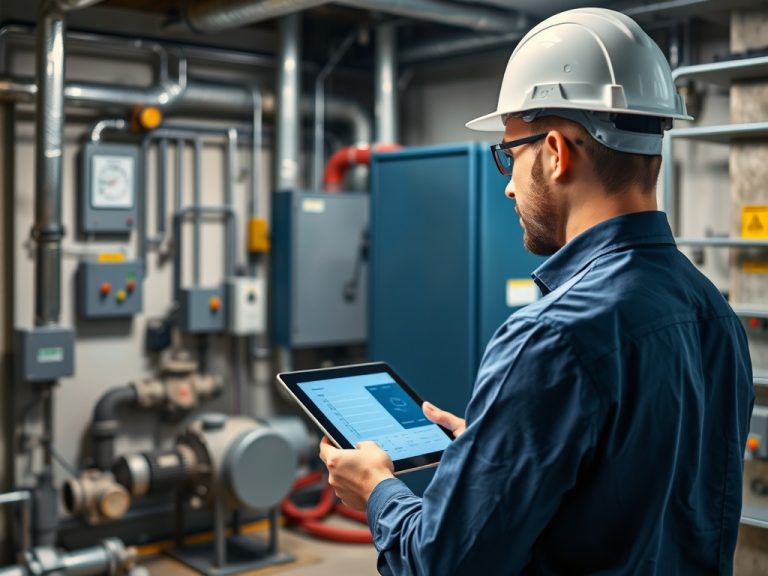

Next-generation hospitality is being shaped by a stack of technologies rather than one breakthrough: AI-assisted service, connected building controls, mobile identity and payments, integrated operating systems, robotics in limited tasks, and better data exchange between booking, property, and guest-service platforms. The durable changes are the ones that remove friction or improve decisions without reducing trust.
TL;DR
- The future hotel is likely to be more connected, but successful properties will still need simple fallback processes when systems fail.
- AI is strongest as a decision and service-support layer when human review remains available for exceptions and sensitive situations.
- Interoperability, cybersecurity, accessibility, and maintainability will determine which innovations become infrastructure and which remain experiments.
Hospitality Technology Is Becoming an Operating System
A modern hotel may rely on a property-management system, central reservation system, point-of-sale platform, payment tools, housekeeping applications, maintenance software, building controls, guest messaging, loyalty data, and marketing systems. The next phase is less about adding another standalone tool and more about making these systems exchange useful information with fewer manual handoffs.
That is why the conversation about the future should start with architecture. If every new capability creates another login, dashboard, data export, and training burden, technology can increase complexity. If systems share clean data and clear responsibilities, the same technology can reduce duplicate work. This is closely tied to hotel workflow technology, where the practical measure is whether staff spend less time reconciling systems and more time handling meaningful exceptions.
AI Will Be Most Visible in Decisions, Not Humanoid Robots
AI can assist with demand forecasting, message drafting, translation, itinerary suggestions, knowledge retrieval, maintenance triage, and service prioritization. Those are narrow, repeatable uses where a system can help people process information faster. More speculative visions often focus on replacing large portions of hospitality labor, but real hotel operations include judgment, physical work, emotional context, safety issues, and exceptions that are difficult to standardize.
A more realistic model is assisted service. Staff may receive a summarized guest history, a suggested response, or a prioritized task list, then decide what action is appropriate. The NIST AI Risk Management Framework is relevant because it encourages organizations to consider validity, reliability, transparency, privacy, security, and other trustworthiness characteristics throughout the AI lifecycle. Hospitality systems handle personal preferences and travel patterns, so governance cannot be an afterthought.
Mobile Identity and Payments Can Reduce Repetition
Digital check-in, mobile keys, stored preferences, and wallet-based payments can shorten routine steps for guests who want them. The strongest implementation gives the traveler a choice: use the mobile path when it is convenient, or use a staffed alternative without penalty when a device, account, battery, or accessibility need makes the digital path impractical.
Hotels also need to treat identity as more than convenience. Any technology that changes room access, payment authorization, or personal-data handling needs careful security design and clear recovery procedures. A fast check-in flow is not an improvement if a guest cannot recover from a locked account or if staff cannot resolve a mismatch without escalating through multiple vendors.
Smart Buildings Connect the Guest Experience to the Physical Asset
Connected controls can make guestrooms and public areas more responsive to occupancy, temperature, lighting demand, and equipment performance. At the asset level, sensors and analytics can help engineering teams find abnormal conditions sooner and compare performance across systems. This is where smart hotel energy technology becomes part of the hospitality product rather than a back-office sustainability project.
The future is not simply more sensors. Data has to lead to an action. An alert that identifies a likely HVAC issue before a room becomes uncomfortable has operational value. Thousands of unprioritized alerts create noise. The quality of thresholds, workflows, and maintenance response matters as much as the sensor itself.
Robotics Will Grow Where the Task Is Structured
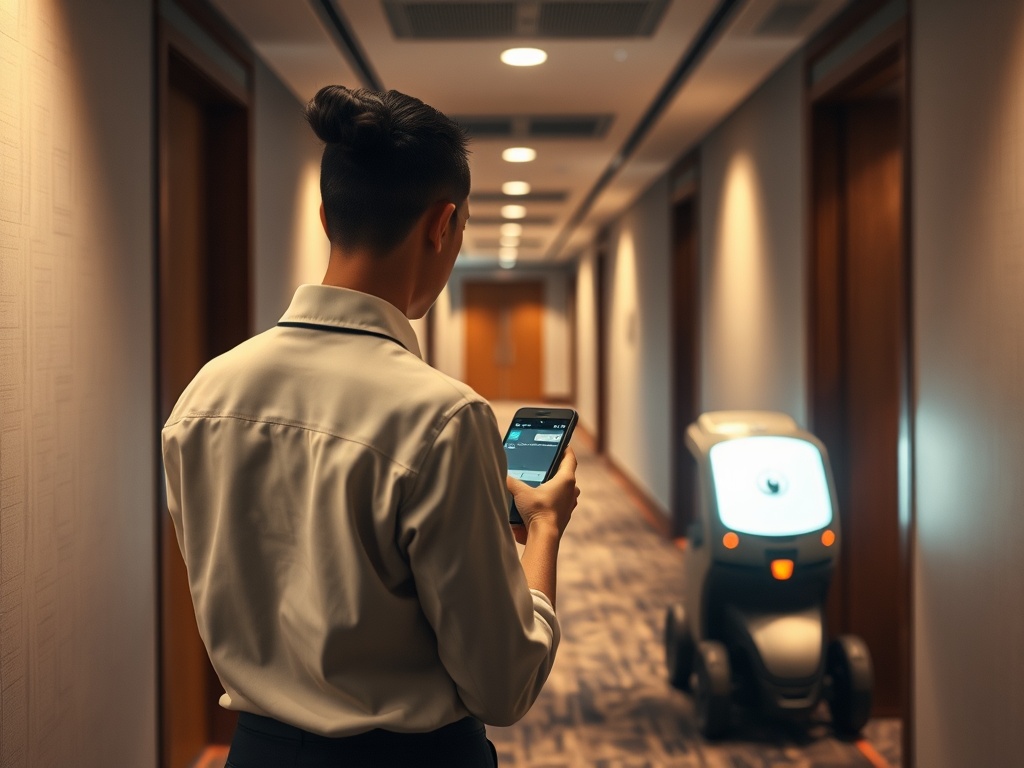
Robotics may expand in areas such as floor cleaning, inventory movement, dish handling, lawn maintenance, or delivery on predictable routes. These uses are easier to define than open-ended guest interaction. A robot that moves linen between known points is solving a different problem from a robot expected to understand a distressed traveler or resolve a complicated billing dispute.
Hotels should evaluate robotics with the same discipline as any capital purchase: task fit, safety, serviceability, space requirements, labor interaction, uptime, and total operating cost. A visible robot can attract attention, but attention is not the same as productivity or better service.
Interoperability Will Separate Platforms From Experiments
The technology most likely to endure is technology that can participate in a wider ecosystem. Hotels change vendors, brands revise standards, buildings are renovated, and guest expectations shift. Systems that depend on brittle custom integrations can create long-term costs that were not obvious during a pilot.
Future-ready properties will likely favor documented interfaces, exportable data, clear ownership of guest information, resilient offline procedures, and measurable service outcomes. These are not glamorous features, but they are what allow a hotel to evolve without rebuilding its entire digital stack every time one product changes.
Four Tests for Technologies That Claim to Be the Future
Hotels can screen emerging technology with four practical tests. First, usefulness: does it solve a frequent guest or operating problem? Second, integration: can it exchange the data required to work with the existing environment? Third, resilience: is there a safe and understandable fallback when the system or network fails? Fourth, ownership: does the hotel understand who controls the data, configuration, support relationship, and long-term cost? A product that cannot answer these questions clearly may still be a promising pilot, but it should not automatically be treated as core infrastructure.
Pilots should also define success before installation. A property might measure reduced response time, fewer manual handoffs, lower energy use, improved task completion, or fewer guest contacts for the same issue. Without a baseline, a visually impressive deployment can be mistaken for progress simply because staff and guests notice it. Clear measures make it easier to expand what works and retire what does not.
Privacy is another durability test. Connected hospitality can collect stay patterns, device identifiers, preferences, and service history. Properties should avoid gathering data simply because a system can capture it. Clear purpose, limited access, sensible retention, and understandable guest choices make the technology easier to govern. A future-facing service model should be able to explain what information is used and why without relying on vague promises about personalization.
Vendor strategy should be reviewed with the same discipline. Hotels need to know how data can be exported, what happens at contract termination, how integrations are supported, and whether a feature depends on proprietary hardware that cannot be serviced elsewhere. These details influence long-term flexibility more than a dramatic product demonstration.
Judge the Future by Friction Removed
A practical next step for owners and operators is to map the guest journey and staff workflow before selecting technology. Identify repeated manual handoffs, avoidable waits, unclear decisions, energy waste, and accessibility barriers, then test technology against those specific problems.
Next-generation hospitality will be defined less by how futuristic a lobby looks and more by whether the property is easier to book, easier to operate, easier to use, and more resilient when something unexpected happens.