

TL;DR Nutrition misinformation is easiest to spot when you evaluate the claim before the personality delivering it. Look for promises that are unusually certain, evidence that is not linked or is misrepresented, testimonials used as proof, undisclosed commercial incentives, and advice that conflicts with basic safety or regulatory facts.
Social media compresses complex nutrition questions into short videos, screenshots, and confident captions. That format rewards certainty, not nuance. The safest approach is to treat a nutrition post as a claim that needs checking, especially when it sells a supplement, promises rapid body changes, or says established guidance is secretly wrong. The FTC's health-products guidance is useful because it explains how health claims should be supported rather than merely made persuasive.
Start with the exact claim, not the creator
Ask: what is the post actually promising? "Supports wellness" is vague. "Lowers blood sugar in seven days" is a measurable medical claim. "This food is toxic" sounds dramatic but may not define a dose, population, or outcome. Write the claim in plain language before judging the evidence.
This step prevents authority cues from doing the thinking for you. A white coat, large following, podcast appearance, or impressive before-and-after image is not evidence. Credentials matter when they are relevant and verifiable, but the claim still needs appropriate support.
Use a five-part misinformation screen
- **Specificity:** Is the outcome clearly defined, or is the language slippery enough to mean anything?
- **Evidence:** Does the post link to research or official guidance that actually supports the stated conclusion?
- **Context:** Are population, dose, duration, limitations, and uncertainty discussed?
- **Incentives:** Is the creator selling a product, using an affiliate link, or promoting a paid program?
- **Safety:** Does the advice encourage stopping treatment, extreme restriction, megadoses, or another step with meaningful risk?
A post does not become false simply because someone earns money from it, and a free post is not automatically trustworthy. The point is to recognize incentives as context, not as a substitute for evidence review.
Learn the difference between a study and a conclusion
A common pattern is to cite one study and then make a claim much broader than the study supports. An animal study may be presented as proof in humans. A short trial may be used to predict lifelong outcomes. An association may be described as a cause. A statistically significant result may be presented without discussing whether the effect was meaningful in daily life.
You do not need to become a researcher to notice these gaps. Check who was studied, what was compared, how long the study lasted, and what outcome was actually measured. If those details are missing, the post is asking you to trust the interpretation rather than inspect it.
Know what "FDA approved" does and does not mean
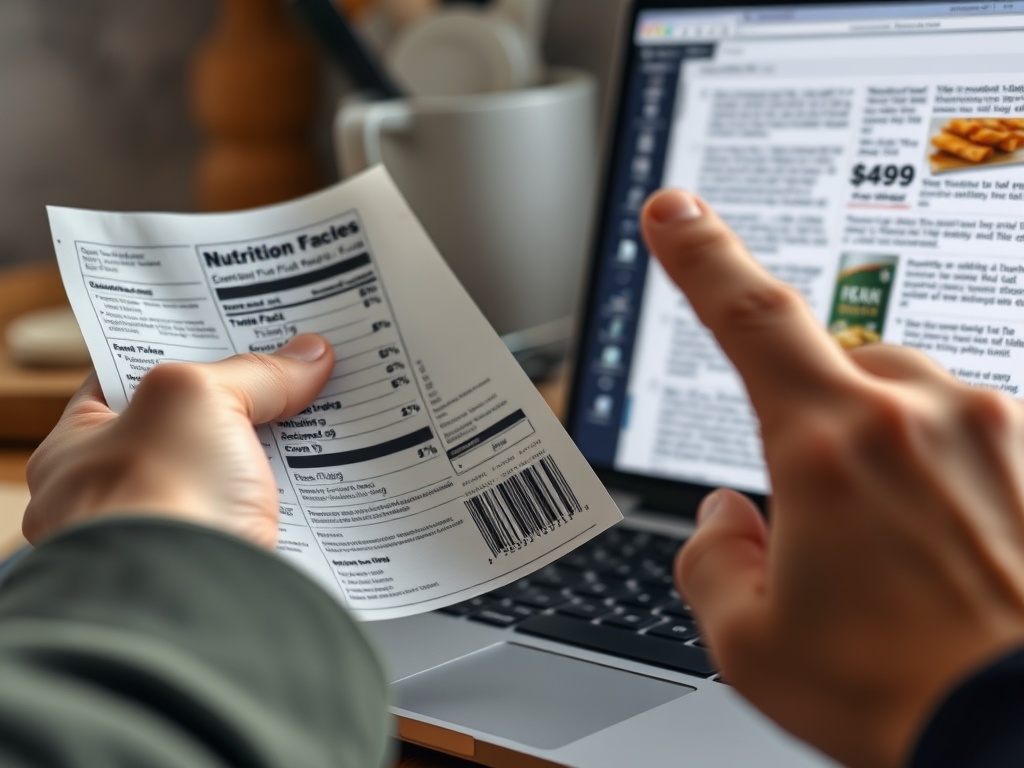
Food and supplement claims are regulated differently from prescription drugs, and dietary supplements are not generally approved by FDA before marketing. FDA explains the categories of food and dietary-supplement label claims, including health claims and structure/function claims. Social posts that use "FDA approved" loosely can create a false sense of regulatory certainty.
This is especially relevant when a creator markets powders, gummies, detoxes, or weight-loss products. If the post implies that a regulator has proven a product works for a dramatic outcome, verify that statement directly on the regulator's site.
A hypothetical claim audit
Imagine a post saying: "This natural drink resets your metabolism, melts belly fat, and works even if you do not change your diet." The creator provides two customer photos, a link to buy the drink, and a screenshot of a study title.
The red flags are not that the drink is "natural" or that customers report liking it. The problem is the chain of unsupported certainty. "Resets metabolism" is undefined, localized fat-loss language is biologically simplistic, testimonials do not establish typical results, and a study title does not prove the product or dose was tested. The FTC has repeatedly focused on health marketing that lacks competent and reliable scientific substantiation.
Cross-check with sources that have a different incentive
For nutrition basics, use government health agencies, academic medical centers, major professional organizations, or systematic evidence reviews. When a claim is about a supplement label, FDA is more relevant than a lifestyle influencer. When it is about advertising promises, FTC guidance is useful. When it is about exercise and healthy weight, CDC or NIH sources can provide a baseline.
The related article on weight loss versus health improvement can help when social posts treat scale change as the only meaningful outcome. Many health behaviors have benefits that are not captured by a single before-and-after photo.
Watch for common persuasion shortcuts
"Doctors do not want you to know"
A conspiracy frame makes disagreement look like proof. It can discourage normal verification because any contrary source is dismissed as part of the plot.
"It worked for me"
Personal experience can be real and still fail to show what caused the change. Sleep, total diet, training, medication, time, and regression toward the mean can all change outcomes.
"One ingredient explains everything"
Human health rarely changes because of a single nutrient in isolation. Dose, overall dietary pattern, medical status, and substitution effects matter.
"If it is natural, it is safe"
Natural origin does not guarantee safety, purity, correct dosing, or freedom from drug interactions.
Build a better social-media habit
Pause before saving, sharing, or buying. Search the exact claim plus the name of a relevant regulator or professional body. Open the primary source rather than relying on a screenshot. Check whether the creator discloses commercial relationships. If the advice would change medication, treatment, or a restrictive diet, discuss it with an appropriate health professional.
For broader beginner fitness decisions, the safe exercise routine checklist uses the same principle: start with verifiable guidance, then adapt it to the person rather than following dramatic claims.
Check how the post handles uncertainty
Reliable nutrition communication usually leaves room for uncertainty. Look for phrases that define what is known, what is suggested, and what remains unclear. Be cautious when a creator turns a limited finding into a universal rule, especially with statements such as 'everyone should avoid this food' or 'this works regardless of your diet.' Good evidence can still have limits, and responsible communicators explain them. Also check whether the post distinguishes a nutrient from the food pattern around it. A study about one compound does not automatically justify a claim about an entire food, supplement, or diet. This uncertainty check is useful because misinformation often becomes persuasive by removing qualifiers. The claim sounds cleaner after all the conditions have been stripped away, but it also becomes less faithful to the evidence.
Make nutrition claims pass a simple test
A trustworthy nutrition post does not need to sound boring, but it should survive basic questions about evidence, context, incentives, and safety. The more extraordinary the promise, the more direct the supporting evidence should be. Treat confidence as presentation and verification as proof.