TL;DR Beginners can build strength with barbells, dumbbells, or machines. There is no universal first choice: machines simplify setup and stability, dumbbells develop control with flexible loading, and barbells become useful when technique and load progression are priorities. Start with the option that makes safe, repeatable practice easiest.
The question is not which tool is objectively superior. It is which tool helps a beginner train the target muscles with stable technique, an appropriate challenge, and a progression they can understand. ACSM’s 2026 resistance-training update notes that equipment type does not consistently determine outcomes for the average healthy adult, which is a useful reminder not to turn a tool choice into a fitness ideology.
Compare what each tool makes easier
| Tool | Main beginner advantage | Main limitation | Often useful when |
|---|---|---|---|
| Machines | Guided path and simple setup | Fixed path may not suit every body | Confidence, isolation work, learning effort |
| Dumbbells | Flexible movement and small loading options | More balance and control required | Home training, unilateral work, learning control |
| Barbells | Efficient loading and clear long-term progression | Technique and setup can be more demanding | Compound lifts, strength-focused progression |
A beginner does not need to commit to one category. Many good programs use machines for stable practice, dumbbells for accessible free-weight work, and barbells later for movements where a bar is convenient. The long-term public-health goal is to perform muscle-strengthening activity regularly, not to use a particular piece of equipment; the CDC’s adult activity guidance focuses on the activity rather than the brand or tool.
When machines make the most sense
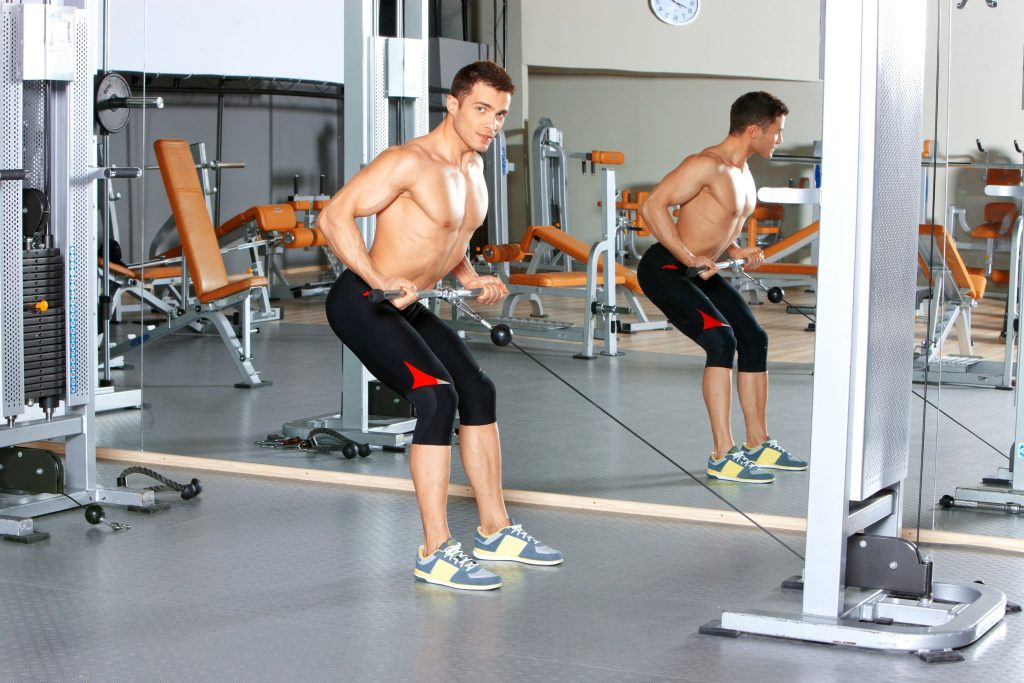
Machines can reduce the number of moving parts in an exercise. A seated chest press, leg press, cable row, or selectorized hamstring curl can let a new lifter focus on breathing, range of motion, and the feeling of the target muscles without also managing a free object in space.
That simplicity is especially valuable when someone feels intimidated in a gym. The limitation is that a machine’s path is designed around an average user. Seat position, handle location, and joint alignment still need adjustment. If a machine forces a painful range or awkward posture, it is not automatically safer just because it is guided.
When dumbbells are a practical first free weight
Dumbbells work well for beginners because they come in small increments, fit many home setups, and allow each arm or leg to move independently. Goblet squats, supported rows, floor presses, Romanian deadlifts with light weights, and carries can teach useful control without requiring a rack or complex setup.
The tradeoff is stability. A dumbbell press asks each arm to control its own path, and a split-stance exercise may expose balance limitations. That is not bad, but it means load should stay modest while movement quality develops. A beginner who rushes to heavy dumbbells can turn a flexible tool into an unnecessarily difficult one.
When a barbell earns a place in the plan
Barbells are excellent for movements that benefit from loading both sides together and from small, trackable increases over time. Squats, deadlift variations, presses, and rows can be efficient choices once the lifter understands setup and can maintain position under load.
A barbell is not a graduation requirement. Some people will prefer machines and dumbbells indefinitely, while others enjoy the structure of barbell training. If a barbell exercise requires a range of motion, rack setup, or technique that a beginner cannot yet control, a simpler variation can build the underlying capacity first.
Use a decision sequence instead of a hierarchy
- Choose the movement pattern you want to train: push, pull, squat, hinge, carry, or another goal-specific pattern.
- Pick the tool that allows a comfortable setup and controlled range.
- Use a load that leaves technique stable through the set.
- Repeat the same exercise often enough to learn it.
- Progress only when the current version feels predictable.
This sequence keeps the decision focused on training rather than identity. It also pairs well with the beginner safety checklist, which covers gradual progression, symptom awareness, and recovery before load becomes the main focus.
Match the tool to the limiting factor
If balance is the main limitation, a machine or supported dumbbell exercise may allow the muscles to work without balance ending the set first. If the goal is learning independent side-to-side control, dumbbells can be useful. If grip, setup, and whole-body coordination are already adequate and the goal is progressive compound strength, a barbell may be efficient.
The same person can have different answers for different exercises. A machine chest press may feel best while a dumbbell split squat works well for the legs. Avoid forcing symmetry in equipment choice when your actual goal is to train movement safely and progressively.
Common equipment myths to leave behind
“Machines do not build real strength”
Machines create resistance that muscles must overcome. They may train coordination differently from free weights, but that does not make the muscular work imaginary.
“Free weights are always more functional”
Function depends on the goal. A stable machine can be highly useful if the goal is strengthening a specific movement or muscle without balance being the limiter.
“Barbells are only for advanced lifters”
A well-coached beginner can learn barbell movements. The issue is not the tool’s reputation; it is whether the setup, range, and load are appropriate for the person.
“Beginners should switch exercises constantly”
Frequent change makes learning harder. Keeping a small set of exercises for several weeks makes technique and progression easier to evaluate.
Decide what success looks like in the first month
Success is not the biggest number lifted. Look for smoother setup, more consistent repetitions, better understanding of effort, and the ability to add a small amount of work without losing control. Those are signs that the training system is becoming learnable.
If you plan to combine strength work with conditioning, the comparison of short HIIT sessions and longer cardio can help you keep hard aerobic work from competing with early strength practice.
Try a mixed-equipment starter plan
A mixed plan can remove pressure to choose one camp. For example, a beginner might use a machine row because the support makes the pulling pattern easy to learn, a goblet squat with a dumbbell because the load is simple to hold, and a light barbell or dowel hinge only if that setup feels natural. Over several weeks, keep the movement goal stable while changing tools only when there is a reason, such as better comfort, easier progression, or access. This approach also reveals preference. Some people train more consistently when machines reduce decision-making; others enjoy free weights and learn quickly. Adherence is not a minor factor. A theoretically excellent tool that you avoid is less useful than a suitable tool you can practice regularly and progress safely.
Choose the tool you will use well
Machines, dumbbells, and barbells can all belong in a beginner program. Start with the option that reduces unnecessary complexity, learn the movement, and progress in small steps. Equipment becomes useful when it supports good practice, not when it wins an argument.