A first vegetable garden does not need to be large or technically complicated. Start with a small site you can reach easily, choose crops suited to your season and available light, prepare the soil or potting mix appropriately, and learn to adjust watering and planting timing from local conditions rather than following a single national calendar.
TL;DR: Begin smaller than you think you need, use local extension guidance for planting dates, test in-ground soil before making major fertilizer changes, follow crop-specific spacing and depth instructions, water according to soil and weather rather than a rigid schedule, and inspect plants regularly so problems are easier to identify early.
Where Should I Put My First Vegetable Garden?
Choose the most practical location that provides the light your chosen crops require, drains reasonably well, and is close enough to water that routine care will not become a chore. Many fruiting vegetables perform best in strong direct sun, while some leafy crops tolerate less, but exact needs vary by crop and climate.
Observe the space at several times of day before building beds or buying containers. Trees, fences, neighboring buildings, and seasonal sun angles can change how much direct light reaches the site.
For a first garden, convenience matters. A modest bed near the kitchen may receive better care than a larger plot at the far edge of the property.
Should I Use In-Ground Beds, Raised Beds, or Containers?
All three can work. The best format depends on soil condition, drainage, mobility needs, available space, budget, and the crops you want to grow.
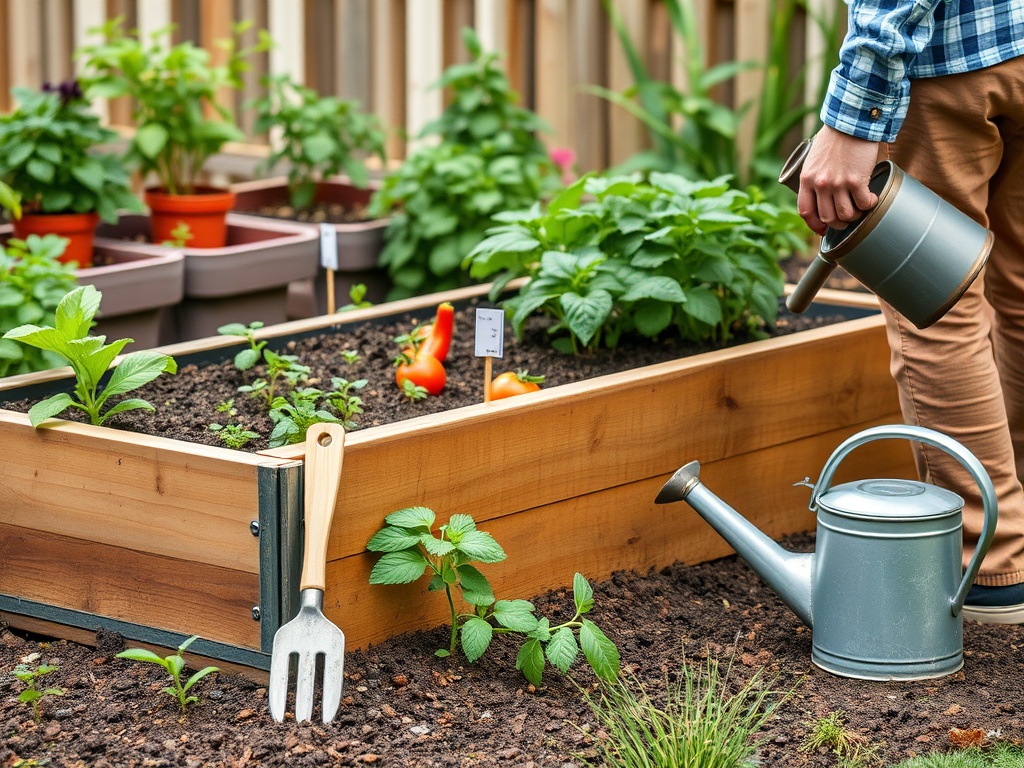
In-ground beds use existing soil and can be economical when that soil is suitable. Raised beds provide more control over the growing medium and can improve access, but they require materials and imported soil or mix. Containers are useful for patios, balconies, and paved spaces, but their smaller soil volume can dry more quickly and requires closer attention to watering and fertility.
Do not assume a raised bed is automatically better. If native soil is healthy and drains well, improving it may be simpler than importing a large volume of material.
Do I Need a Soil Test?
For an in-ground garden, a soil test is one of the most useful early steps before adding lime or fertilizer. The University of Minnesota Extension’s vegetable garden planting guide recommends testing soil to determine appropriate nutrient and amendment needs rather than guessing.
Use a laboratory or extension service that provides recommendations relevant to your region and intended crops. Container mixes are managed differently, so follow the product and crop guidance for those systems rather than applying field-soil recommendations directly to pots.
When Should I Plant Vegetables?
There is no single correct planting date for the United States. Crop temperature tolerance, soil temperature, frost risk, local weather, elevation, and season length all matter. Cool-season crops and warm-season crops are handled differently, and regional extension calendars are more useful than a generic month-by-month list.
Check your local cooperative extension service, the seed packet, and current weather conditions. Treat any planting date as a planning window rather than a guarantee that frost, heat, or unusual weather will cooperate.
Should a Beginner Start From Seeds or Transplants?
Use both if that makes the garden easier. Direct-seeded crops avoid transplant handling and may be practical for vegetables commonly sown where they will grow. Transplants can give warm-season or long-season crops a head start and reduce the amount of indoor seed-starting equipment you need.
Seed packets and reputable nursery labels provide crop-specific sowing depth, spacing, and timing. Follow those instructions instead of applying one depth or spacing rule to every vegetable.
If you bring decorative or permanent indoor plants home while shopping for seedlings, keep their care separate. Our guide to quarantining new houseplants explains why new indoor plants benefit from a temporary isolation and inspection period.
How Much Should I Water?
Water to keep the crop’s root zone adequately moist without leaving the soil continually saturated. How often that requires irrigation depends on soil texture, plant size, rooting depth, temperature, wind, rainfall, mulch, container size, and growth stage.
The University of Minnesota’s vegetable watering guidance recommends checking soil moisture rather than relying only on a fixed calendar. In practice, that means learning how the soil feels below the surface and adjusting after rain, heat, or changes in plant size.
Water near the soil surface rather than routinely wetting foliage when the irrigation method allows it, and water deeply enough to reach the active root zone. Containers may need more frequent checks than in-ground beds.
Which Vegetables Are Easiest for Beginners?
“Easy” is partly a preference and climate question. A crop that grows quickly in one region may struggle during another region’s heat, humidity, short season, or pest pressure.
A practical beginner shortlist often includes crops that fit the available season, are commonly grown locally, and are foods the household actually wants to eat. Leaf lettuce, radishes, bush beans, herbs, summer squash, and cherry-type tomatoes are frequent beginner choices, but none is guaranteed to be trouble-free.
Choose three to five crops rather than trying to grow an entire seed catalog. Fewer crops make it easier to learn spacing, watering, harvesting, and pest patterns.
How Far Apart Should I Space Plants?
Use the seed packet, transplant label, or a local extension crop guide. Spacing affects airflow, root competition, access for harvesting, and the amount of light reaching lower leaves.
Do not crowd plants simply because seedlings look small. Mature size is the relevant comparison. If you are growing in a container, confirm both the container volume and spacing guidance for the crop rather than assuming several plants will share a pot comfortably.
What Should I Do About Pests?
Inspect plants regularly and identify the problem before treating it. Holes or yellow leaves do not automatically mean an insect is responsible; weather stress, watering problems, nutrient issues, disease, and physical damage can create similar symptoms.
When a pest is confirmed, start with crop-appropriate cultural or physical controls where practical. If you use a pesticide, the label determines where, how, and on which crops it may legally be applied. Local extension offices are useful for identifying common regional pests and selecting evidence-based management options.
How Do I Keep the Garden From Taking Over My Weekend?
Make routine tasks visible and small. Keep a watering tool nearby, store gloves and pruners together, inspect plants while harvesting, and pull a few weeds before they become a separate project. If gardening supplies are scattered throughout the house or garage, the organizing principles in a one-weekend home reset can help create one predictable storage point.
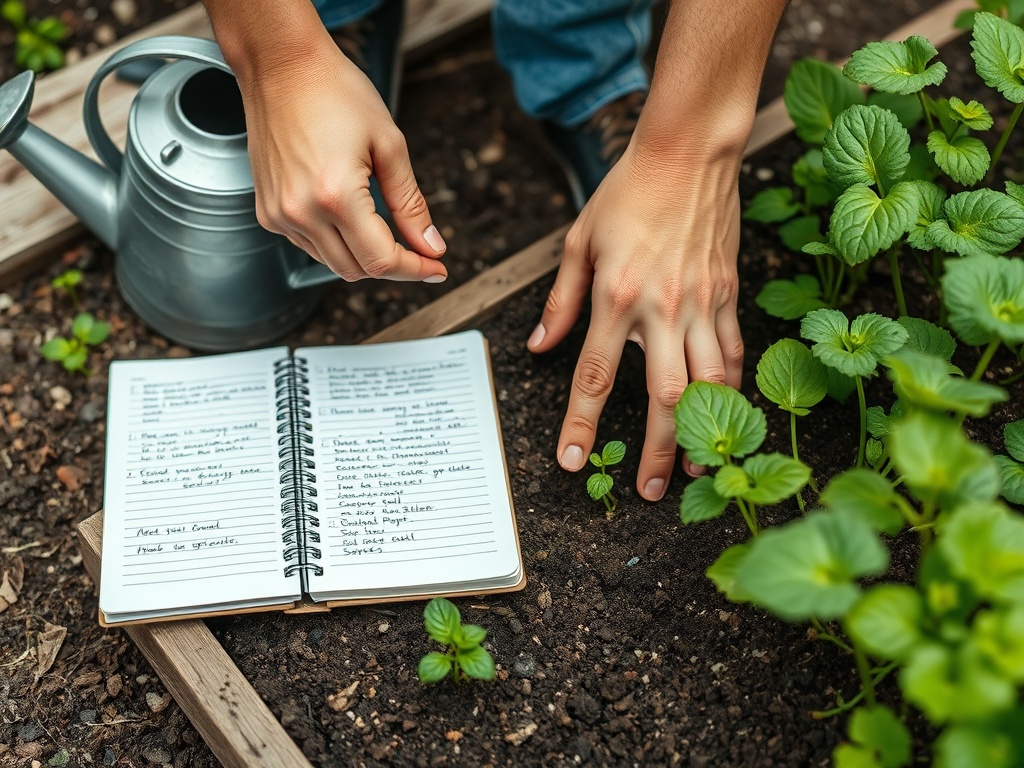
A notebook or simple calendar is useful for sowing dates, varieties, major weather events, and harvest notes. Those observations become more valuable than generic advice because they describe how your own site behaves.
Start With One Small Planting Plan
Pick one growing area, three to five crops, and a realistic first planting window. Check local extension guidance, test in-ground soil when appropriate, and write down where each crop will go before purchasing more plants or seeds.
The first season is partly a learning season. A crop that struggles is information about timing, light, soil, weather, or pest pressure, not evidence that the whole garden failed. Keep the plan small enough that you can observe those details and use them next time.
Vegetable gardening information is provided for general educational purposes. Planting dates, crop suitability, pesticide rules, water restrictions, soil recommendations, and other requirements vary by region. Follow product labels and local regulations, and consult a cooperative extension service or qualified professional for site-specific concerns.[/